
 By
By By Hope Sardella
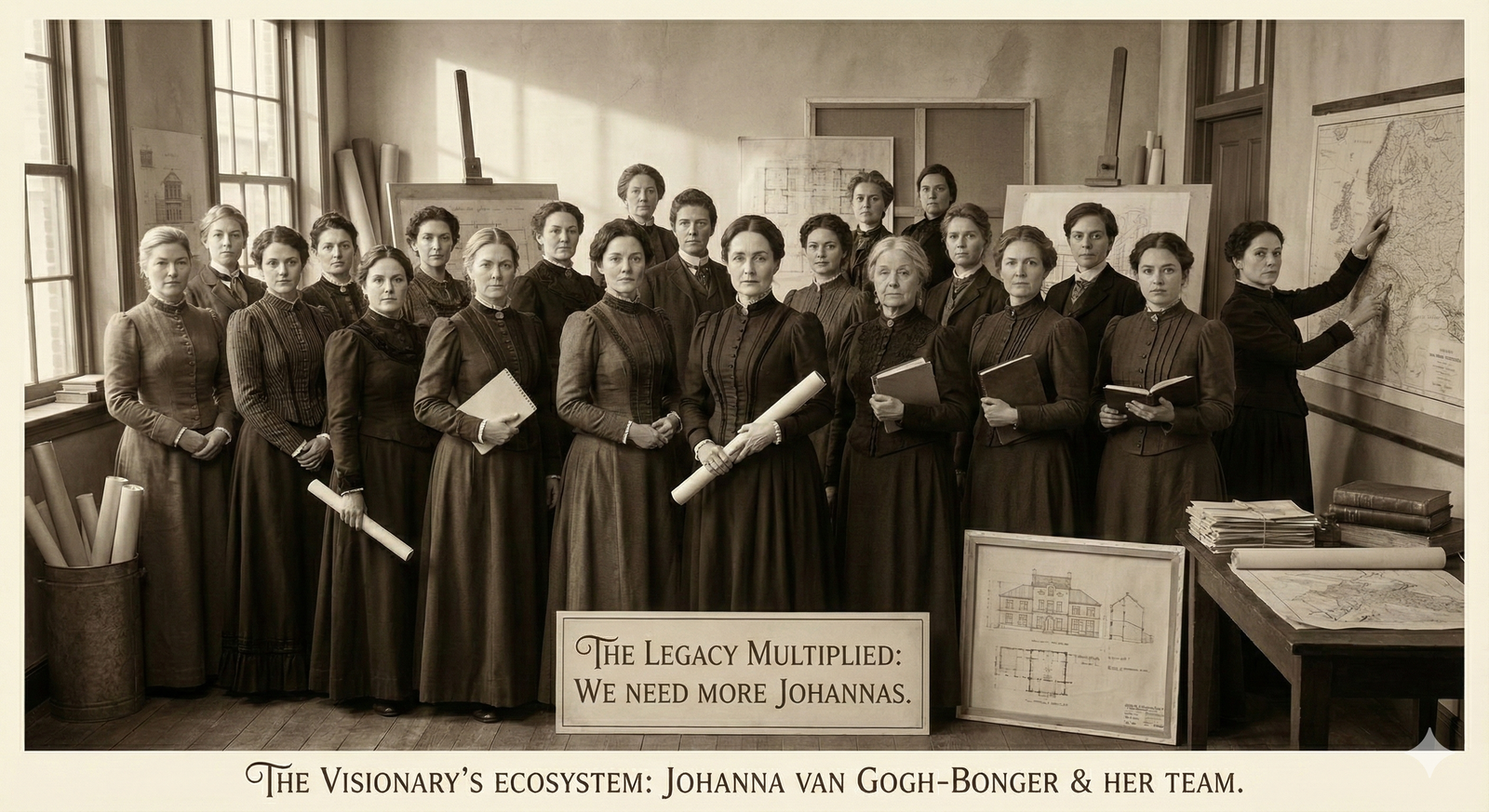
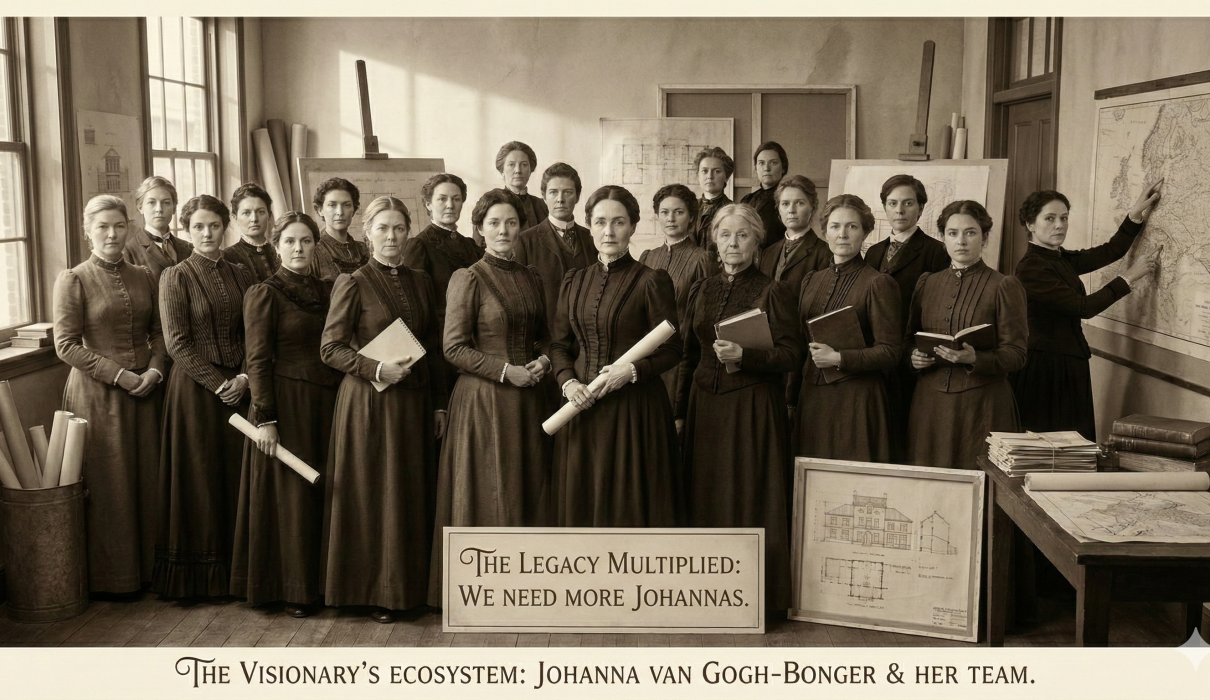
Johanna van Gogh-Bonger is often remembered as the woman who preserved Vincent van Gogh’s legacy — the widow who inherited a stack of paintings and letters and somehow transformed them into a global cultural phenomenon. But that version of her story is far too small. Johanna wasn’t a caretaker. She was an ecosystem. A strategist. A translator of vision. A woman who understood that art doesn’t survive on talent alone — it survives on infrastructure.
And that’s the part we’re still getting wrong.
✦ Johanna Didn’t Just Translate Letters — She Translated a Life
When Johanna inherited Vincent’s letters, she didn’t treat them as relics. She treated them as a living map of his mind. Translating them wasn’t clerical work; it was interpretive labor. She became an English teacher not for stability, but because she needed the linguistic precision to carry Vincent’s voice across borders.
She wasn’t just translating Dutch into English.
She was translating Vincent into the world.
Without her, we wouldn’t know the man behind the myth — the tenderness, the philosophy, the relentless searching. She made him legible. She made him human. And that humanity is what made the world fall in love with him.
✦ The Myth of the “Pure Artist” Is Still Hurting Real Artists
A retired educator once told me, “People go to art school because they feel like they have no other skills.” And that mindset — that artists are somehow incapable of learning business, technology, or strategy — is exactly why so many of them struggle.
Artists do have skills.
They just aren’t taught how to convert those skills into sustainable careers.
Art schools still graduate students who can paint a masterpiece but can’t:
- negotiate a contract
- price their work
- build a digital presence
- protect their intellectual property
- pitch to galleries
- write a grant
- market themselves
- or run the business that their art requires
Johanna’s story exposes the gap.
Talent is not enough.
Artists need systems.
✦ Not Everyone Can Be a Patron — But Anyone Can Be a Johanna
This is the part no one talks about.
We don’t just need more artists.
We need more advocates.
People who:
- believe in an artist’s work
- have skills the artist doesn’t
- can translate, organize, strategize, and amplify
- can help carry the weight the artist can’t carry alone
Not everyone can financially support an artist’s entire career.
But many people can volunteer their skills — ethically, contractually, and sustainably.
Imagine a “Johanna Contract”:
- A marketer helps an artist build their brand.
- A web designer builds their portfolio site.
- A strategist helps them price and pitch.
- A grant writer helps them secure funding.
- A photographer documents their work.
In return, the supporter receives:
- a percentage of future sales
- a share of exhibition revenue
- or a deferred payment once the artist reaches stability
This already exists in other industries — startups, music, film — but visual artists are still expected to do everything alone.
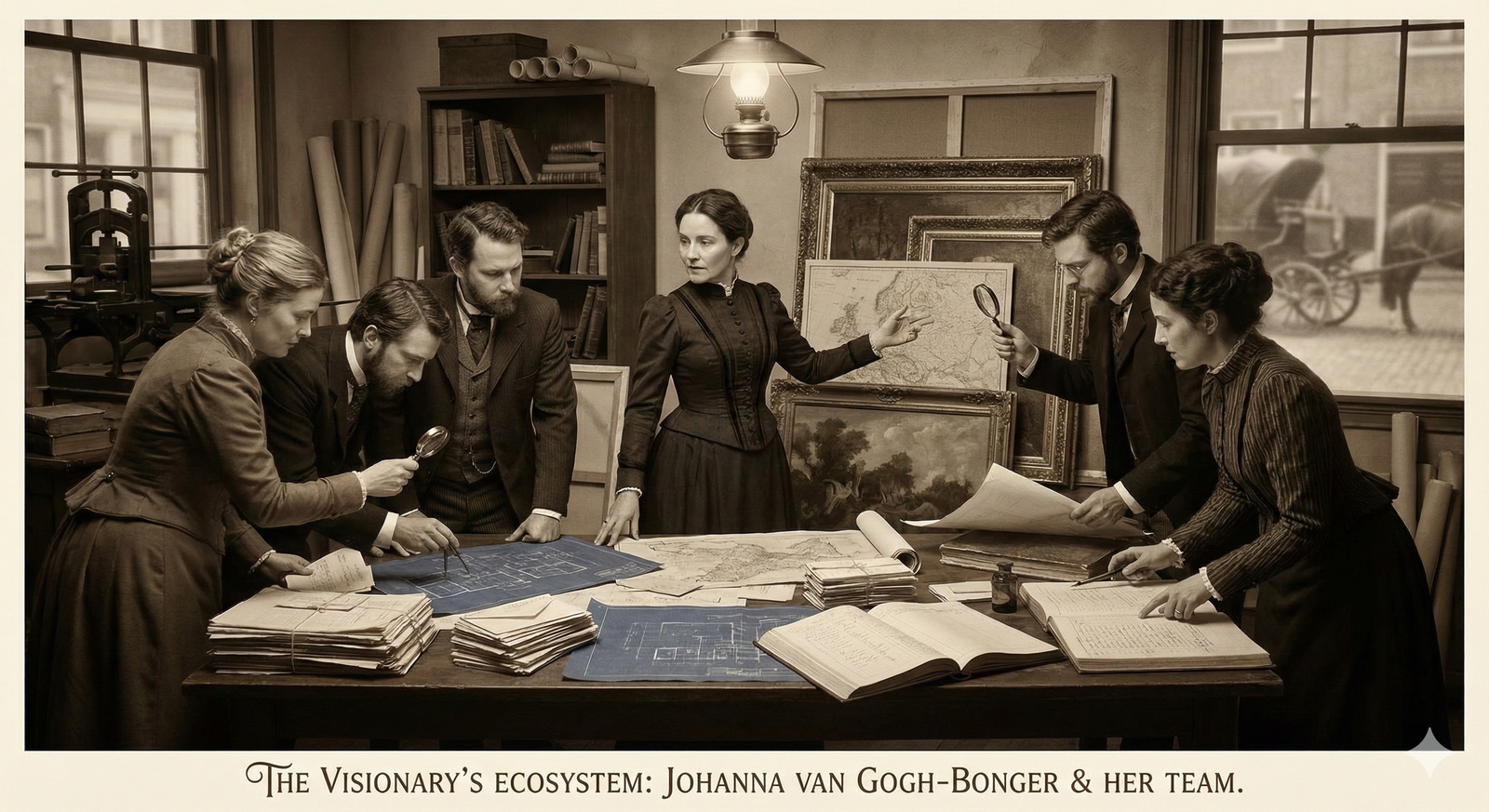
✦ Johanna Wasn’t an Exception — She Was a Model
Her story isn’t about tragedy.
It’s about infrastructure.
She shows us what happens when someone with organizational, linguistic, and strategic skill steps into an artist’s life and says:
“Your work matters. Let me help you build the world it deserves.”
We need more people willing to do that.
More people who understand that supporting an artist isn’t charity — it’s collaboration.
It’s cultural stewardship.
It’s legacy-building.
✦ The Future of Art Depends on the People Who Stand Beside Artists
Artists shouldn’t have to be:
- their own marketers
- their own accountants
- their own agents
- their own tech departments
Some will want to learn those skills — and they should have access to them.
But others will thrive because someone believes in them enough to help carry the load.
Johanna van Gogh-Bonger didn’t paint the art.
She built the world that allowed the art to matter.
And if we want more artists to survive — not just create — we need more people willing to become the Johanna in someone’s story.