
 By
By By Hope Elena Sardella
ENG122: English Composition II, Professor Lori Hawks, December 11, 2017
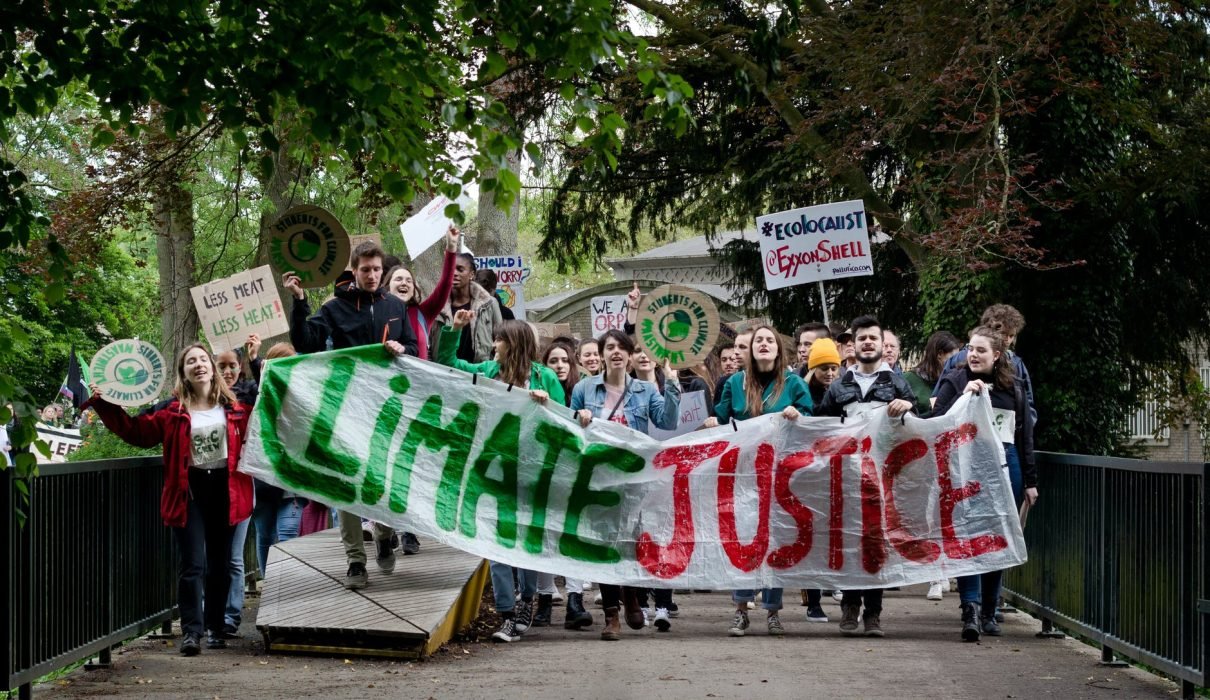
Protesters have been using unproductive advances to gain political change in government. To achieve political change by protesting; requires specific methods, and tactics to see that political entities cooperate with protester’s demands. There is a social science behind the art of protesting that is imperative to examine before attaining political change. Some protesters think change can only be attained by using Street Protesting alone, and aggressive action, but these methods can impair a social movement’s ability to reason with the politic body and elites who have power. Taking an in-depth analysis at consequences of protesting can give us insight on how to make social change more attainable for movements.
To achieve political change through protesting requires specific methods and tactics to sway political entities cooperation with protester’s demands. Some negative results can ensue when protesting participants decide to engage in a social movement that are not organized well. Protesting itself can cause the group to lose the ability to reason, and bargain with their opposition. Terchek (1974), describes that “when real or imagined threats to widely shared values are perceived by a large proportion of the public who believe that they or public officials can eliminate the threat, the issue area under stress is swamped by new participants and the earlier maneuverability of the groups is great constricted” (pg. 1, p. 6). It is important to recognize restrictions to social progress by the method of protest when only using protesting to create some sort of social revolution. There are some solutions we can incorporate to give the protesters’ more leverage in the political realm such as attaining allies to support their cause. Having allies is an important key to protesters’ getting what they want. Weather finding allies for financial or political leverage or both, allies are a necessity. To gain political allies, the protesters inevitably should affect the local business in some fashion to getpublic recognition. The more media coverage and participants the protest has; the more likely the movement will succeed. Terchek (1974), elaborates that “If the disorders induce members of the public to suspend their purchases, alter investment plans, or otherwise diminish inputs valuable to others, then business elite sales induced to terminate the conditions leading to the changed behavior” (pg. 140, para. 1). Even though protesting has it’s downfalls; there is the possibility for a political restructuring of protesting if essential elements are incorporated into their strategies. This subtopic relates to my thesis by looking at the consequences of protesting, and offerings solutions to attaining allies to strengthen protesting outcomes’.
Framing the structure of a protest, and high participation/approval ratings from the citizens of social movements’ are necessities to a victorious. In 2008, Iceland was hit with a devastating economic crisis. Within just a matter of minutes their banks went completely bankrupt. This event gives us a rare opportunity to see that mass protests can invoke change in government. A survey was collected from 610 people in Iceland; the results were that 25.5% of the people stated they attended the protests, and 16% stated the attended more than once. These statistics give the demonstrations in Iceland a 95% confidence approval rating among Icelandic citizens (Bernburg, 2015, pg. 65, para. 3). The “Framing” of a social movement goes hand in hand with creating a successful protest and gaining the participants for the movement. “Framing,” is the construct of adhering to common beliefs people can agree on to lead the revolution that is sought. To get people to join a protest, citizens need to be on board with what beliefs and ideas are being protested. The 2008 Icelandic protests were successful in taking down their government. Berburg (2015), states that “Individuals participate in collective action only if they share the same set of definitions that motivate and legitimate such activity, and hence a key to explaining mobilization is to study processes of framing” (as cited in Bernburg, 2015, pg. 69). Bernburg gives us the tools to make a social movement successful by explaining key factors that led to one of the most successful political reformations in modern day society.
To fully understand why protests can be futile in their endeavors, the examination of two perspectives on protesting may help shed some light blockades affecting protesters progress.Two perspectives on protesting that commonly are adhered to are, “Deliberate Democracy,” which entails working within political constructs to find social change. The Second method of protest is the “Activist” side of protesting. We can view the two models as separate and their opinions about each other, to have a bigger picture of how these two methods should come together for the greater good, to create change. Young (2001), states “the deliberate democrat claims that parties to political conflict ought to deliberate with one another and through reasonable argument try to agree on policy satisfactory for all” (pg. 671). Political figures who are being attacked by an activist group would much rather exercise deliberate democracy as a resource to resolving an issue. Young (2001), examines the typical “Activist” in a protest, the activist veers away from deliberate democracy due to the beliefs that doing so would “perpetuate injustice or harm” (pg. 673). Young says, the activist “finds laughable the suggestion that he and his comrades should sit down with those whom he criticizes and whose policies he opposes to work out an agreement through reasoned argument they all can accept” (Young, 2001, pg. 673). Now that you can see both opinions, how do you feel the activist should approach his tactics? More often than not, protests fail in our modern day society. When we look to history for answers there is evidence that political movements did succeed, but not without sustained effort from its participants. Dr. Fisher (2008), describes the multiple social evolutions; Women’s rights movement, Vietnam War Protests, and the Black Rights movement in the 1960’s that were happening simultaneously occurring that made reformation and protesting successfully. Two Key factors described that make protesting most effective are: Critical Mass, and Sustained action. Critical Mass involves having enough people vexed with the issue. A sustained response is having consistency in the movement trying to be accomplished, and not just going home after the protest and not staying involved. In the 1960s citizens band together for reformation for civil-rights. In other countries, protests usually are driven by circumstances that would threaten their lives. In two thousand and seventeen American the issues we are battling don’t necessarily mean we are not going to eat, or the possibility of being sent out to war because you’re a male (Stewart, A., & Fisher, D. 2008, March 18). This article gives us reasons why protesting currently is failing in America, as well as what it takes to make a protest successful.
So many die-hard activists’ believe political change can be accomplished by protesting with no help at all from political allies, and believe genuinely that reasoning within political constructs is futile to what they are trying to fight for. The reality is though, that the activist that thinks this is acting almost like their opposition; Unwavering in negotiation. Working within the political realm, peacefully protesting, gaining political support from citizens/outside entities, and maintaining action until the problem is resolved seems to be the only solution to increasing strength in a political movement. Protesting is important in societies to making social change when political entities resist, but there is a grave need to reform perception of how social movements should conduct their demands for change. Utilizing statistics and scholarly resources, gives us a greater ability for examination of social movements in areas which protests can improve, along with utilizing proven methods of success. The opinions of those inside and outside the movements, gives you the ability make the decision for yourself; What do you think is the best way to express social change and feel confident in protest?
References
Bernburg, J. (2015). Overthrowing the Government: A Case Study in Protest. In DURRENBERGER E. & PALSSON G. (Eds.), Gambling Debt: Iceland’s Rise and Fall in the Global Economy(pp. 63-78). Boulder: University Press of Colorado. Retrieved from http://www.jstor.org/stable/j.ctt169wdcd.11
Stewart, A., & Fisher, D. (2008, March 18). Do Street Protests Still Work?. NPR. Retrieved from https://www.npr.org/templates/story/story.php?storyId=88461838
Terchek, R. (1974). Protest and Bargaining. Journal of Peace Research, 11(2), 133-144. doi: http://www.jstor.org/stable/422685
Westervelt, E., & Kauffman, L. A. (2017, February 23). What Makes An Effective Protest Movement?. WBR. Retrieved from
Young, I. M. (2001). Activist Challenges to Deliberative Democracy. Debating Deliberative Democracy, 25(5), 102-120. doi:10.1002/9780470690734.ch5