
 By
By Hope Sardella
Rogers State University
SOC 3553 Environmental Sustainability
December 8, 2025
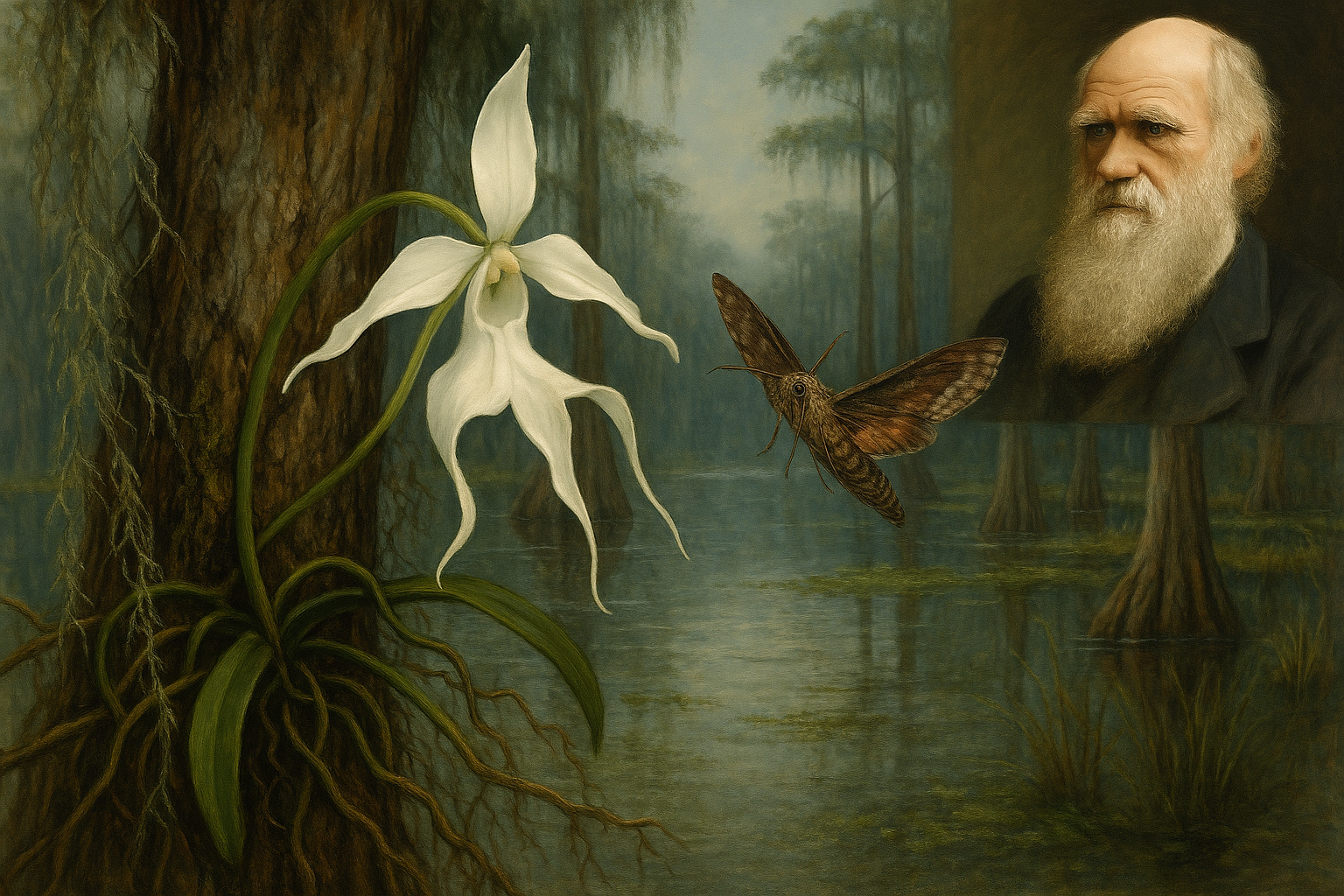
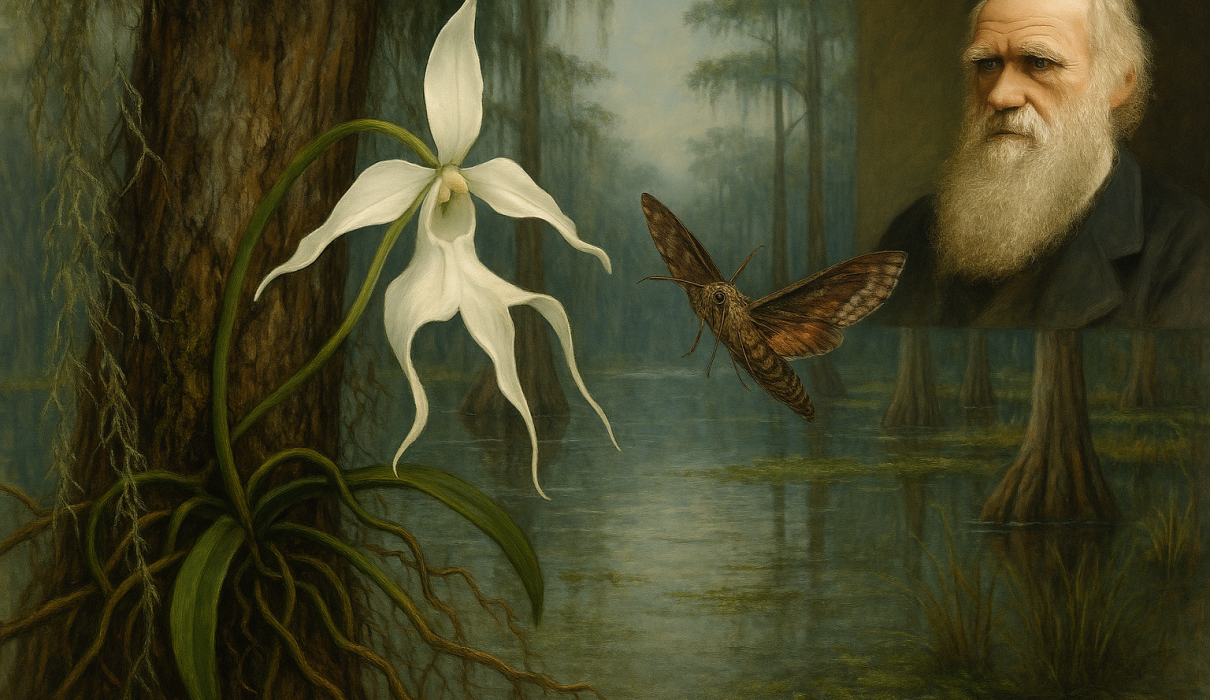
The ghost orchid blooms in a misty Louisiana‑style swamp as its elusive hawkmoth pollinator hovers nearby — a striking reminder of how fragile and interconnected wetland ecosystems truly are.
Abstract
Household wastewater pollution poses a significant threat to wetland ecosystems, leading to biodiversity loss, altered water chemistry, and reduced ecological resilience. This paper analyzes the impacts of untreated residential effluents on wetlands, using the ghost orchid (Dendrophylax lindenii) as a focal case study and symbolic example of broader ecological vulnerability. Findings from recent studies demonstrate how pollutants compromise wetland functions, threaten sensitive species, and impose socioenvironmental costs. By situating the ghost orchid as a sentinel species, the analysis underscores how household wastewater pollution affects not only individual organisms but also the intricate ecological networks that sustain wetland biodiversity. The paper concludes with recommendations for sustainable wastewater management strategies, including constructed wetlands, microbial fuel cells, and nanomaterial-based bioremediation.
Keywords: wastewater pollution, wetlands, biodiversity, ghost orchid, sentinel species, ecological resilience
Introduction
Household wastewater pollution is becoming a major issue in wetland environmental degradation. The growing concern regarding this environmental issue is due to increasing urbanization and population growth. Consequently, there is also an increase in the volume of untreated or mismanaged wastewater entering natural environments. Wetlands, as stabilizing landscapes and habitats for various species, are becoming more vulnerable to household wastewater effluents such as detergents, pharmaceuticals, nutrients, and microplastics. These harmful substances disrupt wetland ecosystems by altering natural dynamics, reducing water quality, and causing biodiversity loss. Educational initiatives and advanced management strategies are essential to mitigate these impacts and preserve wetland biodiversity.
Literature Review
Recent findings in ecology have shown that species such as the ghost orchid in Florida suffer from acute habitat loss and increased pollutant exposure (Mújica et al., 2021). Peer-reviewed studies revealed that the reproduction of this endangered species depends on hawkmoth pollinators, with hydrological stability being critical to its survival (Houlihan et al., 2019). Similarly, wetlands’ natural nitrogen-filtering processes are compromised by untreated wastewater, leading to algal blooms and hypoxia (Yousaf et al., 2021).
Educational Initiatives
Educational initiatives are pivotal in addressing the environmental issue of household wastewater pollution impacting wetland biodiversity. By launching awareness campaigns, communities can be empowered to take corrective actions. Workshops and informational materials should focus on practical steps individuals can implement, such as reducing harmful chemicals in household products and adopting water conservation techniques. These efforts not only raise awareness but also foster a sense of responsibility among individuals to protect these critical ecosystems. Ultimately, such educational programs can result in significant reductions in household wastewater contributions, thereby preserving and enhancing wetland health and biodiversity.
Bioremediation Techniques
Exploring advanced bioremediation techniques, such as the utilization of floating wetlands and nanomaterials, presents innovative pathways for mitigating residual pollutants and supporting wetland biodiversity. The integration of floating wetlands can enhance the natural filtration processes, capitalizing on the root systems of aquatic plants to adsorb pollutants effectively. As discussed in Mousavi-Kouhi’s article, aquatic and wetland plants are particularly adept at phytoremediation due to their extensive root systems and rapid biomass growth, though challenges such as nanoparticle accumulation remain a concern (Mousavi-Kouhi, 2025). Moreover, incorporating nanomaterials in bioremediation efforts can augment the removal processes by enhancing surface adsorption capabilities and facilitating pollutant breakdown. Supporting research into these emerging technologies is crucial for developing scalable and environmentally friendly solutions that preserve the ecological integrity of wetlands.
Constructed Wetlands
Implementing constructed wetlands (CWs) as part of a strategic approach to enhance regulatory measures on household wastewater disposal presents both a viable and environmentally beneficial solution. CWs can serve as effective biofilters, reducing pollution and improving water quality through natural processes while simultaneously offering habitats for wildlife conservation during the degradation of natural wetlands (Zhang et al., 2020). Economic incentives could be introduced to encourage homeowners and businesses to adopt CWs, potentially minimizing non-compliance with stricter wastewater regulations. Additionally, imposing fines for non-compliance would reinforce the importance of adhering to eco-friendly wastewater management practices. Such measures not only enhance treatment efficiency but also promote biodiversity, contributing positively to ecological diversity and sustainability.
Environmental and Social Impacts
Untreated wastewater alters water quality, soil chemistry, and breeding microhabitats for sensitive organisms. The cascading loss of species reduces ecosystem resilience and services such as flood buffering and water purification (Johnson & Balducci, 2024). Socially, communities dependent on wetlands face reduced access to clean water, recreational spaces, and cultural values, while restoration costs rise steeply.
Case Study: The Ghost Orchid as Sentinel Species
The ghost orchid (Dendrophylax lindenii) exemplifies how untreated wastewater and habitat disruption compound risks to biodiversity. Its survival depends on specialized pollinators and hydrological stability, making it highly sensitive to environmental changes. Studies using novel camera-trapping methods revealed intricate interdependencies between orchids and hawkmoths, highlighting the fragility of these ecological networks (Houlihan et al., 2019). As a sentinel species, the ghost orchid demonstrates how pollution and habitat loss can destabilize entire ecosystems.
Management Strategies
The combination of constructed wetlands and technology applications of microbial fuel cell, for example, can significantly reduce wastewater pollution parameters (such as suspended solids, chemical oxygen demand, and ammonia nitrogen), and ranging land use and greenhouse gas effects for urban areas (Islam et al., 2022). Other strategies that combine the application of nanomaterials for pollution bioremediation treatments, such as floating wetlands, have proven effective in the elimination of residual micropollutants from water bodies, and can be adopted in a scalable and environmentally friendly manner, thus supporting sustainable approaches in formulated policies (Ahmad et al., 2024). Therefore, policies that promote these biological and hybrid systems as treatment options can enforce the successful and sustainable management of the impacts of household wastewater pollution while supporting the conservation of wetlands.
Conclusion
Household wastewater pollution is a pressing environmental issue that threatens wetland biodiversity and ecosystem services. Effective management requires integrated regulatory, technological, and educational approaches to mitigate ecological and social consequences. The ghost orchid serves as a sentinel example, illustrating how untreated wastewater pollution undermines ecological resilience and biodiversity.
References
- Ahmad, H. W., Bibi, H. A., Chandrasekaran, M., Ahmad, S., & Kyriakopoulos, G. L. (2024). Sustainable wastewater treatment strategies in effective abatement of emerging pollutants. Water, 16(20), 2893. https://doi.org/10.3390/w16202893https://doi.org/10.3390/w16202893
- Houlihan, P. R., Stone, M., Clem, S. E., Owen, M., & Emmel, T. C. (2019). Pollination ecology of the ghost orchid (Dendrophylax lindenii): A first description with new hypotheses for Darwin’s orchids. Scientific Reports, 9(1), 12850. https://doi.org/10.1038/s41598-019-49387-4https://doi.org/10.1038/s41598-019-49387-4
- Islam, Md. A. S., Saeed, T., & Majed, N. (2022). Role of constructed wetlands in mitigating the challenges of industrial growth and climate change impacts in the context of developing countries. Frontiers in Environmental Science, 10, 1065555. https://doi.org/10.3389/fenvs.2022.1065555https://doi.org/10.3389/fenvs.2022.1065555
- Johnson, S. D., & Balducci, M. G. (2024). Settling moth pollination of a rare orchid in the Habenaria clade revealed with close‐focusing camera traps. Plant Biology, 26(6), 920–928. https://doi.org/10.1111/plb.13696https://doi.org/10.1111/plb.13696
- Mousavi-Kouhi, S. M. (2025). Phytoremediation of nanoparticles, as future water pollutants, using aquatic and wetland plants: Feasibility, benefits and risks, and research gaps. Environmental Science and Pollution Research, 32(11), 6287–6316. https://doi.org/10.1007/s11356-025-36135-7https://doi.org/10.1007/s11356-025-36135-7
- Mújica, E. B., Herdman, A. R., Danaher, M. W., González, E. H., & Zettler, L. W. (2021). Projected Status of the Ghost Orchid (Dendrophylax lindenii) in Florida during the Next Decade Based on Temporal Dynamic Studies Spanning Six Years. Plants (Basel), 10(8), 1579. https://doi.org/10.3390/plants10081579https://doi.org/10.3390/plants10081579
- Yousaf, A., Khalid, N., Aqeel, M., Noman, A., Naeem, N., Sarfraz, W., Ejaz, U., Qaiser, Z., & Khalid, A. (2021). Nitrogen dynamics in wetland systems and its impact on biodiversity. Nitrogen, 2(2), 196–217. https://doi.org/10.3390/nitrogen2020013https://doi.org/10.3390/nitrogen2020013
- Zhang, C., Wen, L., Wang, Y., Liu, C., Zhou, Y., & Lei, G. (2020). Can constructed wetlands be wildlife refuges? A review of their potential biodiversity conservation value. Sustainability, 12(4), 1442. https://doi.org/10.3390/su12041442https://doi.org/10.3390/su12041442