 By
By By Hope Elena Sardella
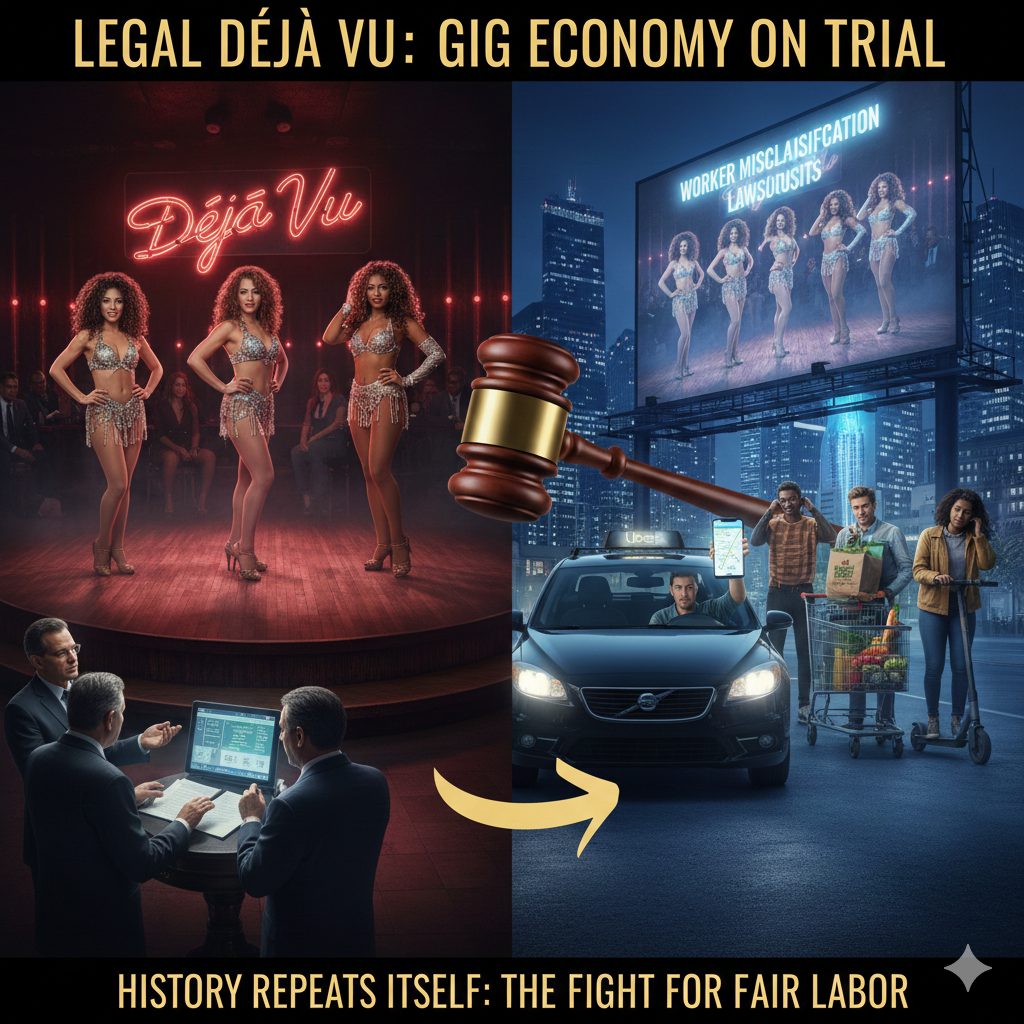
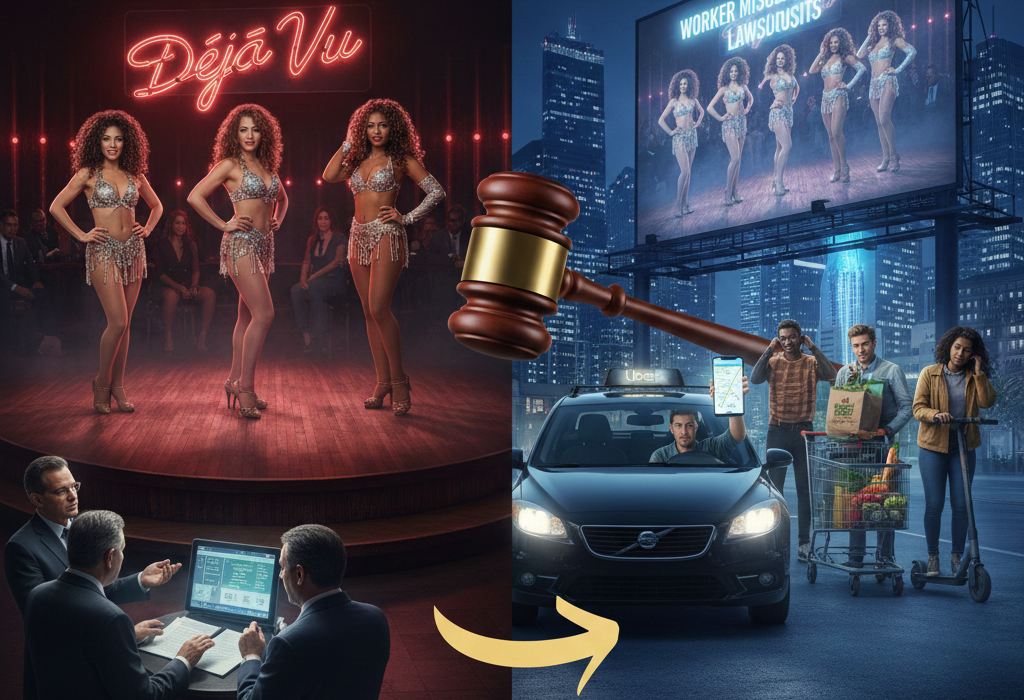
The gig‑economy is not new. Long before Uber, Lyft, DoorDash, and Instacart built billion‑dollar empires on “independent contractors,” another industry had already fought — and lost — the same legal battles. That industry was strip clubs, particularly the nationwide chain Déjà Vu and the Los Angeles club Hustler’s Hollywood.
Their lawsuits created some of the clearest, most influential case law on worker misclassification in the United States. And the parallels to Uber are almost eerie.
This article breaks down how the dancer lawsuits worked, what courts decided, and how those same legal principles apply directly to Uber’s treatment of drivers today — especially around control, fees, tips, and shifting business costs.
- The Core Issue: Calling Workers “Independent Contractors” While Treating Them Like Employees
In the Déjà Vu and Hustler’s Hollywood cases, dancers argued that the clubs:
- Controlled their schedules
- Set the prices for dances
- Enforced rules about appearance, behavior, and customer interaction
- Charged dancers fees to work
- Took a cut of tips
- Threatened discipline for breaking club rules
The clubs insisted dancers were “independent contractors.”
Courts disagreed.
Judges repeatedly found that the clubs exercised employer‑level control, meaning the dancers were legally employees — entitled to minimum wage, overtime, and protection from illegal deductions.
How this applies to Uber
Uber claims drivers are independent contractors. But Uber:
- Sets the fare
- Controls the route through GPS
- Penalizes drivers for rejecting trips
- Deactivates drivers for low ratings
- Controls communication with customers
- Dictates tip prompts and tip visibility
- Unilaterally changes pay structure
- Requires compliance with extensive rules
This is the same pattern courts condemned in the dancer cases: control without responsibility.
- The “House Fees” vs. Uber’s “Service Fees”: Same Tactic, Different Industry
In the Déjà Vu lawsuits, dancers were required to pay:
- Stage fees
- House fees
- DJ fees
- Mandatory tip‑outs
Courts ruled these fees were illegal because employers cannot charge workers to work.
Uber’s version of this
Uber takes:
- A “service fee”
- A “booking fee”
- A “marketplace fee”
- A “temporary fuel surcharge” (that drivers never fully receive)
- A cut of tips (in some markets historically, and still disputed in others)
- A percentage of every fare
Drivers also pay:
- Gas
- Insurance
- Car maintenance
- Depreciation
- Phone data
- Tolls
Just like dancers, drivers are absorbing all the business costs while Uber controls the business.
Courts in the dancer cases said this was illegal. The same logic applies to Uber.
- The Tip Problem: Déjà Vu Was Sued for Misleading Workers About Tips — Uber Does the Same
One of the most explosive parts of the Déjà Vu lawsuits was the allegation that clubs:
- Promised dancers they would earn tips
- Encouraged customers to tip
- But then took a portion of those tips or structured fees so dancers never saw the full amount
Courts ruled this was a violation of wage laws.
Uber’s parallel behavior
Uber’s app tells drivers:
- “Expect a tip”
- “Riders often tip after the trip”
- “You’ll receive 100% of tips”
But drivers frequently report:
- Tips disappearing
- Tips showing up late
- Tips being replaced by “trip supplements”
- Riders claiming they tipped when drivers never received it
- Uber using tip prompts to manipulate driver behavior
If a company promises tips, controls the tipping system, and benefits from the tip structure, courts can treat those tips as wages — which triggers employee protections.
This is exactly what happened in the dancer lawsuits.
- The “Economic Reality Test”: The Same Test That Hurt Déjà Vu Hurts Uber Even More
Courts use the economic reality test to determine whether someone is truly an independent contractor. The factors include:
- Who controls the work
- Whether the worker can negotiate pay
- Whether the worker can operate independently
- Whether the worker’s work is integral to the business
- Whether the worker has meaningful entrepreneurial opportunity
In the Déjà Vu cases, dancers failed every factor.
Uber drivers fail them too:
- Control: Uber controls pay, access to customers, and work conditions
- Negotiation: Drivers cannot negotiate fares
- Independence: Drivers cannot build their own customer base
- Integral work: Uber cannot function without drivers
- Entrepreneurship: Drivers cannot grow a business beyond driving more hours
Uber’s model is even more controlling than the strip clubs’ model — and those clubs lost.
- Courts Already Ruled That “Flexibility” Does Not Cancel Employee Status
Strip clubs argued dancers were independent because they could choose their own schedules.
Courts rejected this argument.
They ruled that flexibility does not override employer control.
Uber uses the same argument today.
But the dancer cases already established the precedent:
You can be an employee with flexible hours.
- Déjà Vu Settled for Millions — Uber Could Face Far Larger Liability
Déjà Vu settled for:
- Millions in back wages
- Millions in damages
- Structural changes to their business model
And that was for a few thousand workers.
Uber has millions of drivers.
If courts apply the same logic:
- Back pay could be enormous
- Reimbursement for expenses could be massive
- Penalties for illegal deductions could multiply
- States could sue independently (as California already has)
The dancer cases show exactly how this story ends — and it’s not in Uber’s favor.
- Why Drivers Should Care: These Lawsuits Could Change Everything
If courts apply the Déjà Vu logic to Uber, drivers could gain:
- Minimum wage
- Overtime
- Reimbursement for gas and maintenance
- Legal protection from unfair deactivation
- Transparent tip reporting
- The right to challenge unfair pay practices
- The right to unionize
Drivers wouldn’t need to sue individually.
State agencies can — and already do — sue on behalf of all drivers.
Just like in the dancer cases.
Conclusion: Uber Is Repeating Déjà Vu’s Mistakes — And Courts Are Not Blind to It
The Déjà Vu and Hustler’s Hollywood lawsuits created a blueprint for identifying misclassification:
- A company calls workers “independent contractors”
- But controls their work like employees
- While shifting business costs onto them
- And manipulating tips or pay structures
Uber fits this pattern perfectly.
The legal déjà vu is real — and the consequences could reshape the entire gig economy.