
 By
By ENV 325 Environmental Management
Instructor: Barbara Zorn-Arnold
02/04/2018
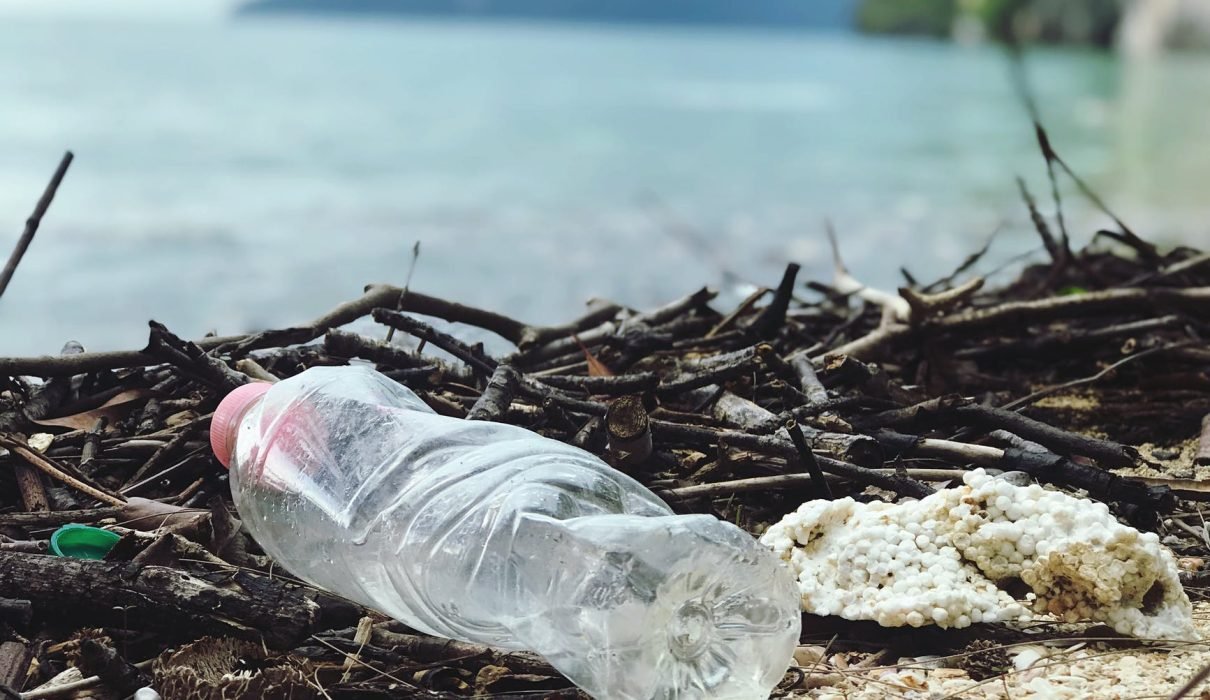
Every day, humans create garbage and trash, also known as Municipal Solid Waste (MSW). The act of generating waste is an inevitable result of human existence. Consequentially, the “urbanization, economic development, and population growth,” are critical indications to the genesis of human wastefulness (Kaza, S., 2018, pg. 38, para. 1). It is evident that global waste accumulation is a cause for alarm to many environmental watch groups. In a study funded by The World’s Bank called What a Waste 2.0: A Global Snapshot of Solid Waste Management to 2050, it was determined that thirty-five-percent off the global waste comes from the wealthiest countries in the world; this revelation should be alarming to many, the most affluent countries only make up sixteen percent of the world’s total population (pg. 20, para. 1). Under the circumstances, statistics have been comparatively identified that lower-income sectors of the global community, making up only 9 percent of the people on earth, are only responsible for 5 percent of the overall waste, equalling 93 million tonnes (Kaza et al., 2018, pg. 20, para. 1). Ultimately, there is a growing need to examine the process in which the wealthiest countries manage their populations’ waste. Although communities have developed a culture of throwing our trash away, one can unlearn this throwaway culture… can’t we? There are so many benefits to waste that meet the eye, such as repurposing any item that can be reused several times to extend its life span from a landfill. Orchestrating proper management of solid waste can be a considerable undertaking for towns, cities, and communities across the globe, furthermore efficient waste management must be implemented to be progressive in reducing the amount of waste entering our landfills. Another method used to manage waste is by separating the biomass from the garbage, and energy is called Waste-to-Energy
management.
The term Waste-to-Energy describes the process in which 64% of the trash that’s taken to landfills is considered biomass; which is then “burned at special waste-to-energy plants that use the heat from the fire to make steam for generating electricity or heat in buildings” (“Waste-to-Energy (Municipal Solid Waste)”, n.d). Hazardous Waste The term Hazardous Waste describes a type of MSW that is dangerous to all forms of living organisms and must be contained and disposed of properly. The United States has defined any compound that has “ignitable, corrosive, reactive, or toxic properties,” as being a hazardous waste. Additionally, sources of hazardous waste developed from industrial manufacturing, including any form of “batteries, liquids, solids, and gas,” can be deemed as contributing to hazardous waste (“Learn the Basics of Hazardous Waste,” n.d). Recent evidence shows that in 2016 hazardous waste contributed .32 percent of the average global waste generation (Kaza, S. et al., 2018, pg. 36, Table 2.14). Although this may seem like a minute portion of the total global waste production, hazardous waste is detrimental to the environment and living organisms. Regardless of how small. An important case example of the impacts of hazardous waste is the infamous Dupont case. Renowned environmental journalist Lerner (2015) illustrates in her expose’ The Teflon Toxin, that Dupont is a chemical factory based out of West Virginia, and in 1947 the factory developed an unregulated surfactant coined “C8”. Additional evidence asserts that between the years 1951 up until the year 2003, a total of 2.5 million gallons of C8 had been Week 1 – Assignment 1 4 dumped into our waterways and our air supply, resulting in 99% of the world’s population now contains C8 in their blood (as cited in Lerner, 2015). Between 1960, up until the 1970s, new environmental laws emerged stemming from the unregulated industry of factories producing new, untested chemicals, which sometimes possessed almost magical properties.
The ramifications of not having any safeguards to protect all life can and will result in grave repercussions. Fortunately, the Resource Conservation and Recovery Act (RCRA) was put into action by the EPA to act as an authority to “set forth a framework for the management of non-hazardous solid wastes” (“Summary of the Resource Conservation and Recovery Act,” n.d). Through the RCRA, the EPA uses its power to apply safe hazardous waste management through a specific process called “Cradle-to-Grave.” The Cradle-to-Grave process ensures meticulous regulatory compliance from the moment the hazardous waste is “created, while it transported, treated, stored, and until it is disposed of” (“EPA’s Cradle-to-Grave Hazardous Waste Management Program,” n.d). To ensure that hazardous waste is properly disposed of, there is a process in which must be implemented to verify that waste is deemed hazardous. With this in mind, in 1984 amendments were made to the RCRA in order to cease disposal of specific waste on dry land, these amendments included the development of The Land Disposal Restriction Program (LDR), in conjunction with the creation of further government policy Hazardous and Solid Waste Amendments (HSWA) (“Land Disposal Restrictions for Hazardous Waste”. n.d). In conclusion, the RCRA, along with the LDR, and HSWA where pivotal policies that made it more difficult for big companies to treat their hazardous waste like garbage, they now have to care for the hazardous waste in every stage of its life.
References
U.S Energy Information Administration. (n.d.). Waste-to-Energy (Municipal Solid Waste). Retrieved from https://www.eia.gov/energyexplained/?page=biomass_waste_to_energy The U.S Environmental Protection Agency. (n.d) . Land Disposal Restrictions for Hazardous Waste. Retrieved from https://www.epa.gov/hw/land-disposal-restrictions-hazardous-waste
U.S. Environmental Protection Agency. (n.d). Learn the Basics of Hazardous Waste. Retrieved from https://www.epa.gov/hw/learn-basics-hazardous-waste#cradle
Kaza, S.; Yao, L.C.; Bhada-Tata, P.; Van Woerden, F. 2018. What a Waste 2.0 : A Global Snapshot of Solid Waste Management to 2050. Urban Development;. Washington, DC: World Bank. © World Bank. https://openknowledge.worldbank.org/handle/10986/30317
License: CC BY 3.0 IGO. Lerner, S. (2015, August 11). The Teflon Toxin and the Chemistry of Deception Part 1. The Intercept. Retrieved from https://theintercept.com/2015/08/11/dupont-chemistry-deception/.
Hunt, M. J. (2019). Hazardous Wastes. In World Book Advanced. Retrieved from https://www-worldbookonline-com.proxy-library.ashford.edu/advanced/article?id=ar249380