
 By
By By Hope-Elena Sardella, 2019
One of the initial starting points of the three thresholds pertains to more lesser environmentally impactful construction, or activity of some regard requires the implementation of Categorical Exclusion (CE). Further evidence to support this comes from the official website of the National Environmental Policy Act (n.d) which defines a CE as a series of:
“class of actions that a Federal agency has determined after review by CEQ, do not individually or cumulatively have a significant effect on the human environment and for which, therefore, neither an environmental assessment nor an environmental impact statement is normally required. “
(“categorical exclusions,” n.d).
The prior evidence suggests that a CE is specifically intended to be for a particular set of environmental projects that are more than likely not going to make a significant impact of the humans is living near the immediate area of the project. Marriott, (1997) elaborates that a CE usually requires for conformance of the use of land to be reviewed.
Additionally, categorical exclusions must be reviewed to ensure no exclusions are present. Finally, if exclusions are current, then one must proceed to develop an EIS (environmental impact statement); the next threshold of inquiry (pg. 21, para. 4). Moving forward, the second ecological threshold of documents are Environmental Impact Statements or EIS. An EIS chiefly states the effects that do have a substantial negative impact on human life; and the third threshold is EA/FONSI which describes environmental occurrence that falls in the middle of the two extremes of CE and EIS (Marriott, 1997, pg. 18, para. 1).
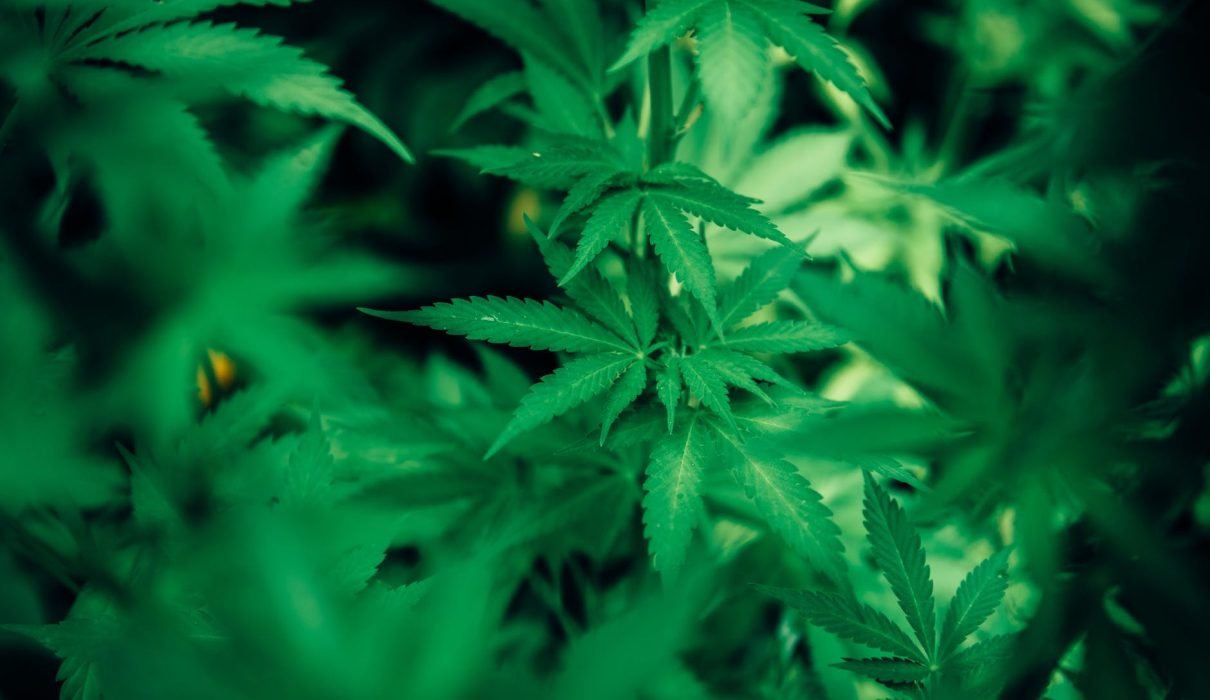
One may think growing a bit of pot is harmless, but the “green-rush” holds heady implications for nefarious individuals to contaminate our water ways, and abuse pesticides. One example in which Categorical Exclusions need urgent attention is in regards to the rapid reformation of medical marijuana grow sights that are cropping up all over the state of Oklahoma. If one is familiar with Oklahoma’s long-standing history with agriculture, it is a history plagued with over-exploitation of natural resources; that being chiefly the land, as well as water resources. A vital quote to bear in mind:
“[The Dust Bowl] came about because the expansionary energy of the United States had finally encountered a volatile, marginal land, destroying the delicate balance that evolved there….What brought [farmers] to the region was a social system, a set of values, an economic order. There is no word that so fully sums up those elements as “capitalism.”
as referenced by William , R (2018)
This quote brings our state back to the understanding that historically our lands have been of precious value to the rest of America, do to our strong agricultural community and natural resources. The people of Oklahoma being that of strong, simple beginnings are left vulnerable to be taken advantage of because of a reduced economy and living standards. With an insatiable desire to buy, consume, and grow marijuana the state of Oklahoma faces possible implications for repeating history if left unchecked. The possible implications for rapidly approving a Categorical Exclusions to a unexperienced agriculture populous can lead to the misuse of pesticides, as well as the abuse of the waterways so precious to Oklahoma. In California, a point of contention with a specific focus on illegal grow operations references ;
“illegal growers sometimes use heavy earthmoving equipment to clear-cut forest in order to plant their marijuana crop. To obtain water for their plants, these growers frequently divert water from creeks illegally and indiscriminately, tapping into streams that may be on someone else’s property or may be critical habitat for endangered fish. Because these illegal growers usually do not have an interest in maintaining the long-term quality of the land, it is not uncommon for them to sprinkle repellents such as rat poison at the base of their plants, which are then washed off with the rain into streams, killing fish and polluting water supplies. When they are done harvesting their crop and ready to move on, they regularly leave fertilizers and dangerous chemicals that leach into soil and nearby streams, killing wildlife and causing irreparable damage”
(Babcock, 2017, pg. 729, para. 2)
Current damage to the environment of either legal, and illegal marijuana cultivation is not unknown, because we can learn from our predecessors (California), thus illegal agriculture practices have shown to be habitual pattern of behavior with people whom are involved in the marijuana industry. I pose the notion that the state cannot Categorically Exclude, nor approve Categorical Exclusions because the social nature of the the marijuana industry, is ones that is complicated and riddled with underdeveloped policies. Further review of medical marijuana grow sights need to be monitored regularly by federal agencies in order to ensure the safety and the health of our society in all matters of agriculture practices. Furthermore, medical marijuana grow sights should automatically be required to undergo Environmental Assessment or EA/FONSI; bypassing a CE approval; and requiring byannual EA/FONSI approvals. Finally, the size of a grow sight needs to be the determining factor in which a EA/FONSI approval is needed, or a EIS.
On the whole, the three thresholds for environmental documentation are necessary for holding federal agencies, corporations, and individuals accountable for all projects conducted with potential implications for human life. With the increasing medical marijuana industry data, and documentation of the ecological damage of the “green-rush” has been well documented. It is my suggestion that state agencies incorporation the three thresholds of categorical exclusions in marijuana grow sights with the Department of Agriculture, as well as the Environmental Protection Agency.
References
Categorical Exclusions. (n.d.).NEPA.GOV. Retrieved from
https://ceq.doe.gov/nepa-practice/categorical-exclusions.html
Babcock, H. (2017). Illegal Marijuana Cultivation on Public Lands: Our Federalism on a Very
Bad Trip. Ecology Law Quarterly, 43(4), Retrieved from
https://scholarship.law.berkeley.edu/cgi/viewcontent.cgi?article=2140&context=elq
Marriott, B. (1997). Environmental impact assessment: A practical guide. New York, NY:
McGraw-Hill.
Williams, R (2018) The Dust Bowl and unchecked capitalism. Retrieved from
https://goodreadings.wordpress.com/2008/05/12/the-dust-bowl-and-unchecked-capitalism/