
 By
By 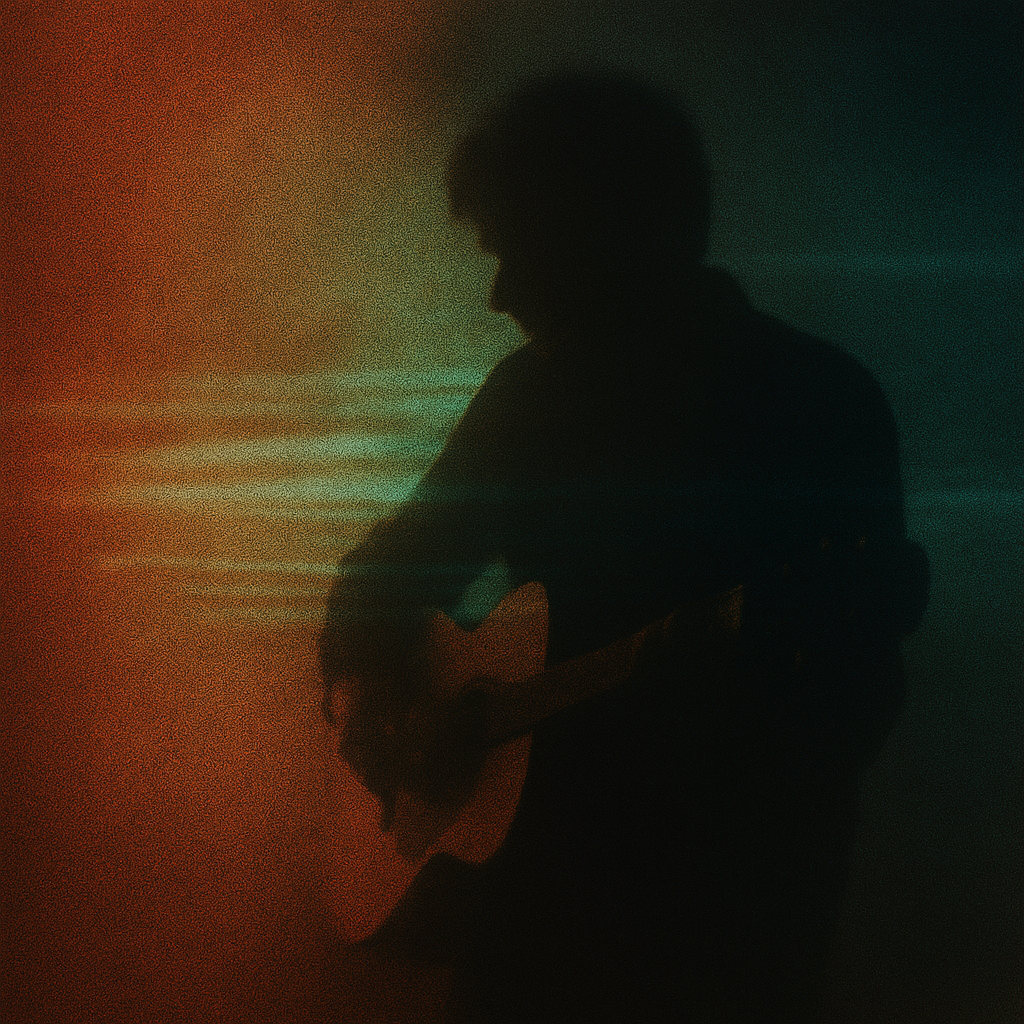
By Hope Sardella
There are artists who sculpt, artists who strategize, and artists who build elaborate emotional architectures before ever touching an instrument. Trainee Bob is none of these. His music doesn’t begin with intention — it begins with a moment. A flicker. A guitar in his hands and a phrase that arrives without warning, like a visitor who doesn’t knock.
“I rarely sit down to write,” he tells me. “It just comes sometimes when I play. If I like something I’ve played, I record it and take it from there.”
This is the foundation of his world: instinct over intellect, discovery over design. Where some musicians chase a sound, Trainer Bob waits for the sound to find him.
The Art of Getting Out of the Way
Ask him about emotional intent and he’ll shrug with a kind of gentle honesty that feels increasingly rare in music interviews.
“I can’t really describe the emotional content of my music,” he says. “I don’t listen to it once it’s finished.”
For him, emotion isn’t something he injects into the work — it’s something that emerges as he follows the thread of a song. He doesn’t try to steer it. He doesn’t try to shape it into something comforting or unsettling. He doesn’t even try to understand it.
“I’m just following where the song seems to need to go. I try to keep out of the way as much as possible.”
There’s a humility in that. A surrender. A willingness to let the unconscious — that deep, wordless place where memory and instinct blur — take the lead.
“The unconscious is a much more accomplished artist than I’ll ever be,” he says with a laugh. “The song has to be in charge. I’m just trying to discover it.”
Chaos as a Creative Partner
Many artists talk about experimentation as a philosophy. Trainer Bob doesn’t. He doesn’t even think of his music as experimental.
“It’s just what I sound like,” he says. “There aren’t any rules in music as I see it.”
But chaos — or maybe more accurately, unpredictability — is woven into his process. The more he tries to consciously guide a song, the worse it becomes. The more he lets go, the more the track reveals itself.
This is not chaos for chaos’s sake. It’s chaos as a compass. Chaos as a collaborator. Chaos as the thing that keeps him honest.
The Moment a Track Comes Alive
Every song has a turning point for him — a moment when the track stops feeling like a problem to solve and starts feeling like something alive.
“There’s usually a point after the vocals are recorded when I get over the initial disappointment of how it’s turning out and start to enjoy how it’s sounding again,” he says. “If I don’t get to this point, I move on to the next song.”
It’s a vulnerable admission, but a universal one. Every creative person knows that dip — the moment when the thing you’re making feels wrong, clumsy, embarrassing. Trainer Bob doesn’t fight that feeling. He waits it out. And when the shift comes, he knows the song is breathing.
Influences That Don’t Announce Themselves
He listens widely — Marc Almond, Joy Division, New Order — but he doesn’t believe these artists directly shape his sound. They’re part of the atmosphere, not the blueprint.
His real influence is something quieter, more internal.
“I tend to feel happier when I’m being creative,” he says. “I write to avoid feeling like I feel when I don’t write.”
It’s not inspiration. It’s survival. Creativity as a stabilizer. Music as a way of staying in motion.
Three Songs That Define the Trainee Bob Atmosphere
If Trainee Bob insists his influences don’t announce themselves, his recent tracks offer a subtle counterpoint. Songs like “Balloon,” “Smile,” and “Your Angels Sing” reveal a sonic world that feels adjacent to Joy Division and New Order not through imitation, but through mood — a kind of quiet emotional gravity that never raises its voice.
Each track leans into a soft, almost spoken‑word delivery, the kind of vocal presence that feels like he’s talking to you from just a few feet away. There’s no performance in it, no push. Instead, his voice drifts over experimental frequencies that hum, shimmer, and bend at the edges, creating a backdrop that’s both fragile and strangely hypnotic.
– “Balloon” feels like a memory unfolding in real time — delicate guitar phrases, a voice barely above a whisper, and a sense that the song is discovering itself as it goes.
– “Smile” carries a dreamlike haze, its melodic lines softened by textures that wobble and warp in the background, giving the track a quiet emotional ache.
– “Your Angels Sing” is the most ethereal of the three, a piece that feels suspended between melody and atmosphere, as if it’s being transmitted from somewhere just out of reach.
What ties these songs together isn’t genre or structure — it’s restraint. Trainee Bob doesn’t force emotion; he lets it seep through the cracks. He doesn’t chase a sound; he follows whatever appears. And in doing so, he creates music that feels intimate, unguarded, and unmistakably his own.
Cover Art That Looks Like Nothing Else
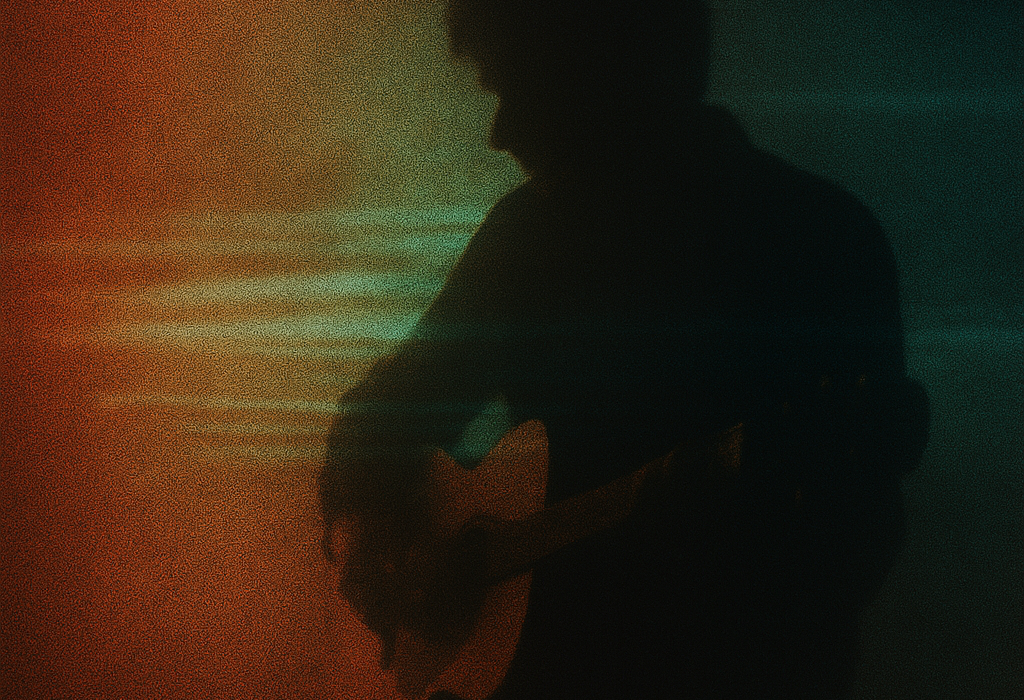
Trainee Bob’s cover art is its own quiet universe — unmistakably his, instantly recognizable, and refreshingly original in a landscape crowded with over‑designed visuals. The images feel less like artwork and more like emotional weather: soft gradients, blurred textures, and colors that seem to hum rather than shout. There’s a looseness to them, an unpolished honesty that mirrors the way he makes music. Nothing feels staged or strategic. Instead, the covers look found — like fragments of a dream, or still frames from a memory you can’t quite place. They’re unique without trying to be unique, and that’s what makes them so striking. They don’t explain the songs. They extend them.
Never Finished, Only Abandoned
Trainer Bob mixes his own tracks, which means he spends long stretches listening not to music, but to frequencies. Eventually, the song dissolves into technical noise — and that’s when he knows it’s time to let go.
“I never feel that a song is finished,” he says. “I just get sick of working on it.”
It’s a sentiment that would make perfectionists twitch, but it’s also deeply human. Art isn’t finished; it’s released. And once it’s out in the world, he doesn’t revisit it.
“I don’t want to hear them afterwards.”
The work is for the making, not the re-living.
Becoming Trainee Bob
The name Trainee Bob emerged during a quieter period with his band, The Federation of Light. Songs were piling up unused, and he needed an outlet. So he started finishing them himself, releasing them under a new identity.
Then life shifted in a way that reshaped everything.
“Unfortunately, my dear friend and Federation bandmate Martin died a while back,” he says. “So now Trainee Bob is my only musical outlet.”
There’s a tenderness in the way he says it — not dramatic, not embellished, just true. Trainee Bob isn’t just a project. It’s a continuation. A place to keep creating in the absence of someone who once shared that space with him.
If his future self ever listened back to his catalog, he imagines the reaction would be:
“Jesus, couldn’t you have spent longer on the mix? Lazy git.”
It’s a joke, but also a thesis. Trainer Bob isn’t chasing polish. He’s chasing presence. He’s chasing the moment when a song reveals itself and he gets to follow.
The Artist Who Lets the Song Lead
In a world obsessed with branding, strategy, and narrative clarity, Trainee Bob is refreshingly uninterested in all of it. He doesn’t write with intention. He doesn’t sculpt emotion. He doesn’t chase influence. He doesn’t perfect the mix.
He listens. He follows. He lets the unconscious speak.
And maybe that’s why his music feels the way it does — not unstable, not experimental, but alive. Alive in the way only something discovered, not designed, can be.