By Hope Elena Sardella, April 2, 2019
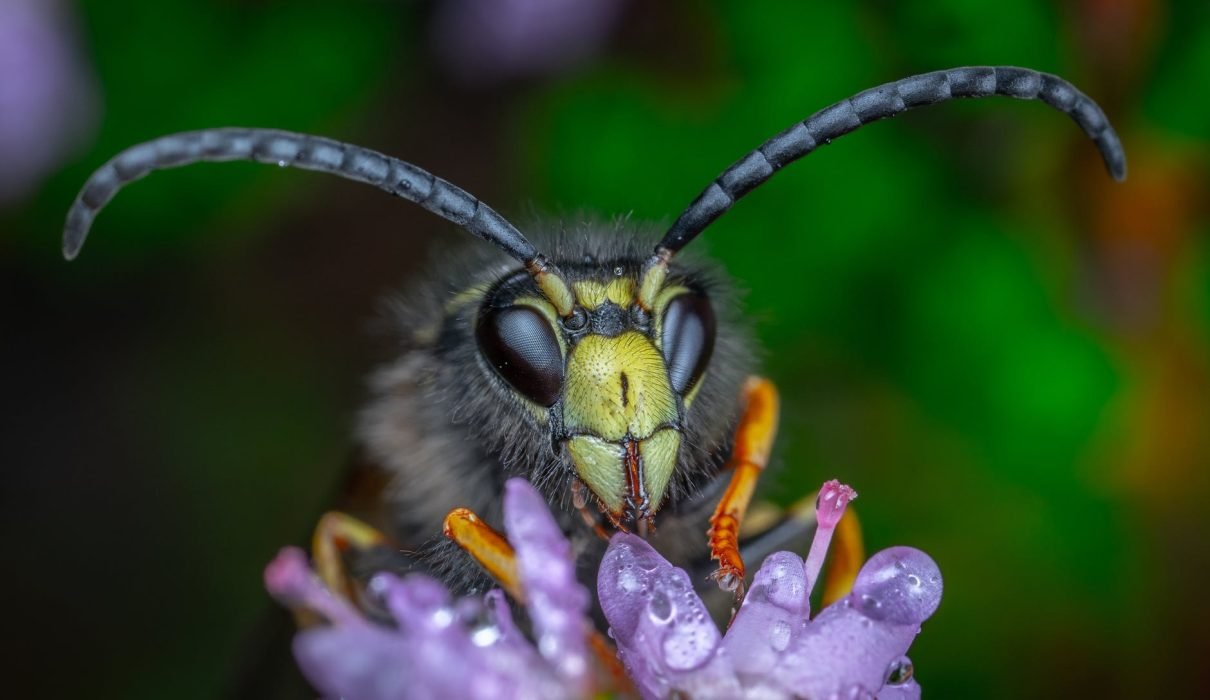
In this weeks discussion, I explore the world of bees and other pollinating insects and their connection with a variation in attraction to certain species of plants than others. It’s essential to understand that Honeybees (Latin: Apis Melifera), travel to a vast array of plant species annually, thus creating a “pollination network”. As a result, the pollination network has the amazing ability to enact diffuse co-evolution which can determine natural selection as well as changes on the evolutionary level which are unable to be traced by anyone lineage of species (Smith, T. M., & Smith, R. L. 2015, pg. 12.5, para. 2). It is essential that humans play a vital role in supporting life, and habitat for bees and pollinating insects by listening to them, and what their personal likes and dislikes are. Based on the findings of Desneux et al., (2007), De La Rua et al. , (2009), one of the biggest crises that are occurring in bee populations is that their hives are being contaminated by pesticides, and these pesticides are out populations of young, and the mature bees. Through the short video called LASI BEE RESEARCH & OUTREACH; The School of Life Sciences at the University of Sussex – Laboratory of Apiculture & Society of Insects (LASI), introduces the audience to a scientific experiment that was conducted by Barbuzou and Ratnieks (2013), to create a foundation of evidence to support their hypothesis that some bees have more of an attraction, or incline to pollinate specific species of flowers than others. In order to prove this theory professor Francis Ratieks and three of his students planted thirty-two varieties of summer flowering plants within one meter by one meter of each other. Additionally, there were two in quantity of each species of flowers divided into two different locations of the garden by term so attracted to the least attractive look species of plants. In Summary, the students at the University of Sussex would spend several hours a day in the summer tracking the species of insects going to the species of flowers for nectar. Finally, I would like to take a moment to analyze the mixed messages that we are sending to people about how they should landscape. For instance, many counties are giving payment initiatives to use fewer plants that consume water daily. In these locations of the country, such as California, there still should be substantial safeguards in place to preserve the bee and pollinating insects populations in every corner of every city.
References
Smith, T. M., & Smith, R. L. (2015). Elements of Ecology (9th ed.). Boston, MA: Pearson.
LASI Bee Research & Outreach. (2013, October 14).Quantifying variation among garden plants in attractiveness to bees and other insects (Links to an external site.)Links to an external site. (Links to an external site.)[Video File]. Retrieved from https://www.youtube.com/watch?v=4u2LeTPGo9w
(Desneux et al. , 2007, De La Rua et al. , 2009).
Bees: Biology, Threats, and Colonies, edited by Richard M. Florio, Nova Science Publishers, Incorporated, 2011. ProQuest Ebook Central, http://ebookcentral.proquest.com/lib/ashford-ebooks/detail.action?docID=3019256.
Created from Ashford-ebooks on 2019-04-01 23:10:18.
 By
By