
 By
By 
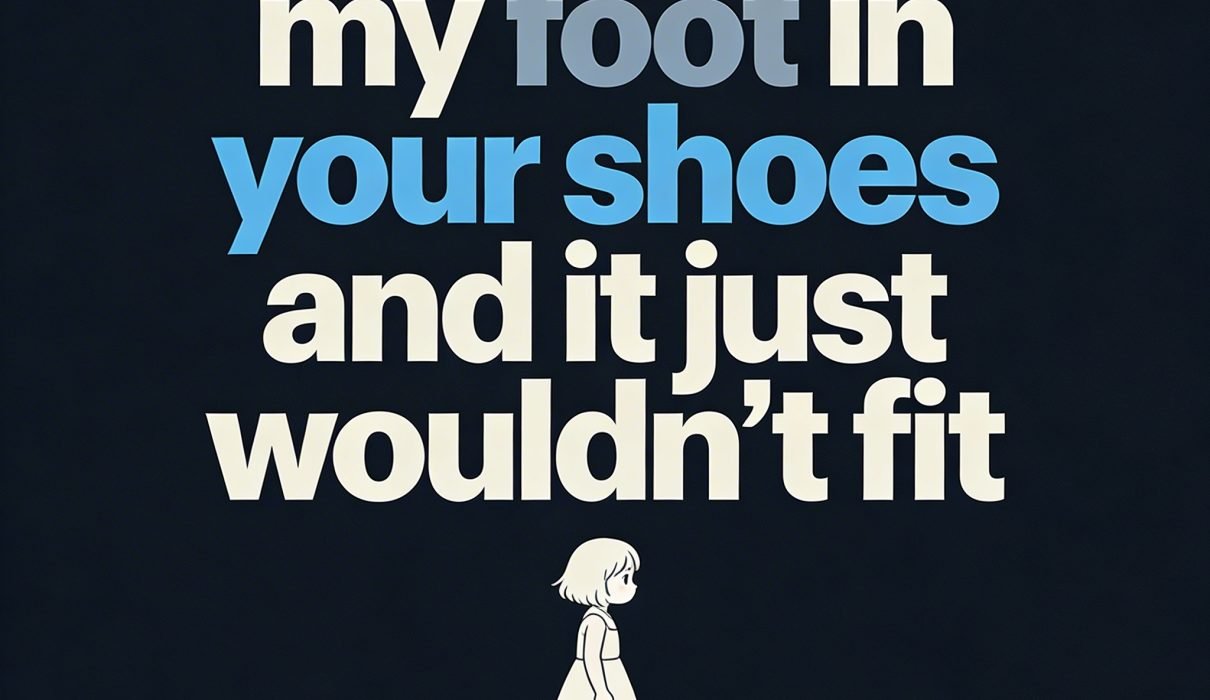
“Tried to put my foot in your shoes and it just wouldn’t fit.”
There was something about this line that stopped me in my tracks the first time I heard it. It put words to a feeling I’ve had more times than I can count: that disconnect between trying to understand someone else’s life and realizing there’s only so far you can go.
You can care, you can listen, you can imagine—but you can’t fully live their story for them. And honestly, that realization can feel both humbling and a little heartbreaking.
We talk a lot about “putting yourself in someone else’s shoes,” like it’s a simple, one-step process. Just be more empathetic. Just imagine what they’re going through. But this line admits a harder truth: sometimes, no matter how hard you try, the shoes just don’t fit. Their pain, their past, their responsibilities, their fears—those things are shaped by experiences you haven’t had. You can stand next to them, you can walk beside them, but you can’t completely become them.
That’s why this lyric resonates so deeply with me. It captures the tension between wanting to be there for people and recognizing your limits. I’ve felt that with friends, with family, even with people I’ve only known online. You see someone going through something heavy, and you want to say, “I get it,” but a part of you knows: I don’t fully get it—and that’s okay. It doesn’t make your support less real; it just makes it honest.I think a lot of us have felt this way, even if we’ve never had the words for it.
Maybe you’ve tried to understand why someone made a choice you wouldn’t have made. Maybe you’ve watched a loved one struggle with something you’ve never personally faced. Maybe you’ve been on the other side, wishing people understood you better and realizing they just…can’t. That gap between your world and theirs can feel lonely, but it’s also a reminder that every person carries a whole universe inside them.What matters is what we do with that awareness.
Instead of pretending we fully understand, we can say, “I may not know exactly how this feels for you, but I’m here.” Instead of judging from the outside, we can stay curious and compassionate. Instead of beating ourselves up for not being able to “fix” what someone else is going through, we can accept that sometimes the most powerful thing we can offer is presence, not solutions.
And it’s also okay when the roles are reversed—when other people can’t fully understand you. It doesn’t mean your story is too much or too complicated; it just means it’s uniquely yours. There’s a quiet strength in knowing that some parts of your journey won’t be fully understood by anyone else, and still choosing to keep going.
So if this line hits you the way it hits me, let it be a reminder of two things: you’re not alone in feeling that distance between your experience and someone else’s, and it’s okay that the shoes don’t fit. Empathy isn’t about perfectly becoming another person; it’s about trying, caring, and walking alongside them—even in your own pair.