Author: Hope-Elena Sardella, 8/16/2019
The demand for energy is virtually ceaseless. With only a finite supply of natural resources, countries across the globe are striving to find sustainable sources of power in the hope of phasing out fossil fuels such as natural gas, coal, and petroleum. More importantly, certain populations have had the capacity to make necessary adaptations for renewable energy use, such as using wind-power. Wind-power may give the impression to some that this technology is a recent technological advancement, but it is in actuality, one of the oldest mechanisms to harness power ever created (Chamberland. 2013.). This paper aims to educate the reader on the benefits and costs associated with wind-power production. Firstly, the author will examine the different technologies and methods that are used to harness wind-power based on the environment. Moving forward the analysis then proceeds to investigate the environmental advantages and disadvantages of wind-power, political legislation surrounding wind-power, and long-term availability of wind-power.
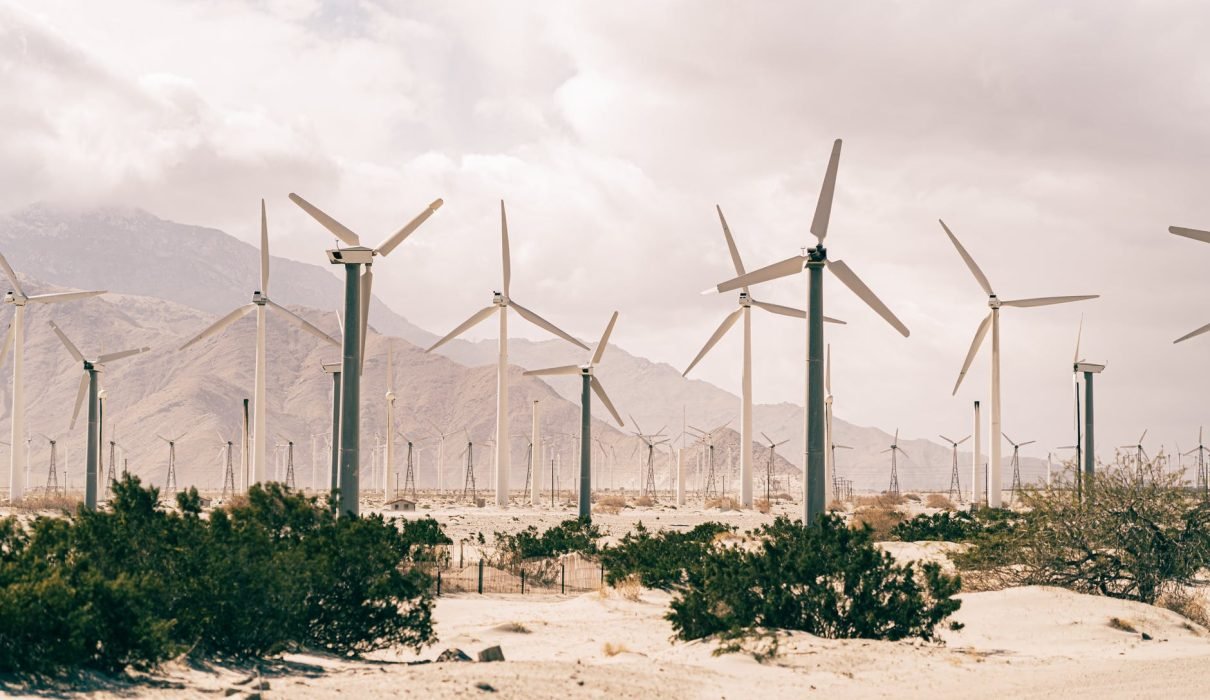
The technology to harness the energy of wind takes a whole industry of hardworking and smart individuals to create a machine that is efficient and effective in the machines capacity to make energy. At present, there are three different methods of creating wind power: Utility Scale, Small Wind, and Off-Shore (American Wind Energy Association, n.d). To elaborate, Utility-Scale Wind makes use of wind turbines on land, their sizes range from “100 kilowatts to several megawatts” (AWEA, n/d). Additionally, all power created is distributed back into a power grid. The second method of producing power from wind uses “Small- Wind” these types of Wind Energy operations are used to generate electricity on a microscopic scale, such as a home, or commercial business and excess energy is generally not redistributed back into a power grid. Lastly, Off-shore methods are developed by stationing wind turbines in the water. Offshore wind-farm are characterized by being much larger in comparison to land wind turbines, thus generating more power than land turbines (American Wind Energy Association, What is wind energy?, n/d ). These three methods of harnessing wind often determines the way in which the wind-turbine is engineered in order to effectictly, and effectively make energy.
Moving forward, experts in the wind industry, claim that horizontal axis wind turbines are some of the most popular, in addition to vertical-axis turbines. Similarly, for a wind turbine to be effective, the engineering must facilitate that the wind-turbine has the ability to produce the most amount of power with the least amount of power, and that is essentially what the horizontal axis and vertical axis bring to the table (Konstantinidis & Botsaris. 2010. pg. 3, para. 1). Furthermore Konstantinidis & Botsaris (2010) states that horizontal axis turbines are used more frequently to the vertical axis turbines because they make more power. Often key mechanisms of horizontal axis turbines are “rotor (blades, hub and pitch system), nacelle (rotor shaft, bearings, gearbox/ generator, mechanical brake and yaw system), tower, foundation and the electrical (power feed cables, lightning protection, power converter, transformer) and control system (sensors, actuators, system consisting of hardware and software)” (Konstantinidis & Botsaris. 2010. pg. 3. para. 1).
The consumption of wind-power has only increased in the U.S and is predicted to use 2.673 quadrillions Btu by 2019 (NWCC, 2010).With an increasing need to supply more energy every year, we must mitigate that growing need with sustainable power. Wind technology can be a crucial player in replacing fossil fuels, but we cannot do this without innovations to refine the process of harnessing wind-power. Therefore, the development of wind power technology is crucial to offset the negative consequences of wind-power and to maximize efficiency. Building on these ideas, one would love to believe that Wind-Power is wholly sustainable and creates little to no environmental impact, but this is not the case. Some of the most significant casualties of wind turbines are bats and birds. Luckily, numbers of bird deaths due to turbines are relatively low, and scientists at the National Wind Coordinating Committee (2010) concluded that turbines did not threaten to exist bird populations (National Wind Coordinating Committee (NWCC). 2010). Significant interpretations of this issue range from believing that wind-power is detrimental to the ecosystem in which wind turbines occupy; to the perception that the risks wind power poses outweighs the benefits .
Impact on the environment only can be reduced with the assistance of humans developing a literal and physical safety net, or method of ecosystem management, in terms of laws and regulations that protect wildlife, as well in the literal net system that mitigate the entry of birds into wind-farms. An illuminating passage from Konstantinidis and Botsaris (2016) states that bird mortality can be overcome with; “careful site selection, the use of brightly colored sections of rotors or the use of some nighttime lighting (for the bats)” (Konstantinidis & Botsaris, 2016, pg. 5, para. 5). The prior evidence suggests that making wind turbines more visible, and placing them in selective locations in which birds can de the rate of deaths on birds near wind farms Some additional downfalls that come with the presence of wind-power are; scenic disturbance of local views, noise, and indeed just the general fear from the public property value will decrease (“Environmental Impacts of Wind Power “, n.d) . The Socioeconomic issues that have been consistent in wind power is an ongoing battle and continues to affect public perception.
One can determine, that environmental impact statements are a requirement prior to development of wind-power sights. Furthermore, negatives that come with wind power development are undoubtedly overshadowed by the many positives of wind power. In light of these ideas, it makes sense to explore the economic advantages and disadvantages of wind-power production. The analysis then proceeds to review the current political legislation surrounding wind-power.
References
Chamberland, D. (2013). Wind power. Salem Press Encyclopedia of Science. Retrieved from
http://search.ebscohost.com.proxy-library.ashford.edu/login.aspx?direct=true&db=ers&
;AN=88806572&site=eds-live&scope=site
“Environmental Impacts of Wind Power “, Union of Concerned Scientists. Retrieved from
https://www.ucsusa.org/clean-energy/renewable-energy/environmental-impacts-wind-power#.W
_rli4FKjnE.
Konstantinidis, E. & Botsaris, P. (2016). Wind turbines: current status, obstacles, trends and
technologies. IOP Conference Series: Materials Science and Engineering. doi:
http://iopscience.iop.org/article/10.1088/1757-899X/161/1/012079/pdf
“What is Wind Energy? “. American Wind Energy Association, Retrieved from
https://www.awea.org/wind-101/basics-of-wind-energy.
Renewables and Carbon Dioxide Emissions. n.d. U.S Energy Information. Retrieved from
https://www.eia.gov/outlooks/steo/report/renew_co2.php?src=Environment-b1
Wind turbine interactions with birds, bats, and their habitats: A summary of research results and
priority questions. (2010). National Wind Coordinating Committee (NWCC). Retrieved from
https://www1.eere.energy.gov/wind/pdfs/birds_and_bats_fact_sheet.pdf
Wind turbine interactions with birds, bats, and their habitats: A summary of research results and
priority questions. 2010. National Wind Coordinating Committee (NWCC). 2010. Retrieved from
https://www1.eere.energy.gov/wind/pdfs/birds_and_bats_fact_sheet.pdf

 By
By